Professional Asbestos Testing in Highland Park
The median construction year for homes in Highland Park is 1944, with 76% of housing units built before 1960 and 46.1% built before 1939. This indicates a very high prevalence of older housing stock, significantly increasing the likelihood of asbestos-containing materials and other age-related environmental hazards. The median construction year for homes in Highland Park is 1944, with 76% of housing units built before 1960 and 46.1% built before 1939. This indicates a very high prevalence of older housing stock, significantly increasing the likelihood of asbestos-containing materials and other age-related environmental hazards. Our certified inspectors provide accurate asbestos testing to protect your health and property.
Why Highland Park Properties Need Asbestos Testing
The median construction year for homes in Highland Park is 1944, with 76% of housing units built before 1960 and 46.1% built before 1939. This indicates a very high prevalence of older housing stock, significantly increasing the likelihood of asbestos-containing materials and other age-related environmental hazards. Properties in Highland Park face specific asbestos risks that require professional testing:
- High percentage of pre-1960 housing stock
- Legacy industrial contamination from former auto plants
- Aging and problematic water infrastructure
- Documented stormwater and drainage issues
- High vacancy rates in housing units
- Proximity to major urban industrial centers
Environmental History & Risk Profile: Highland Park
Industrial History
Highland Park has a significant industrial history, being home to the Highland Park Ford Plant, where the moving assembly line was pioneered, and the founding site of Chrysler Corporation. The subsequent deindustrialization, including the demolition of large sections of the Ford plant in the late 1950s and Chrysler's departure in the early 1990s, has left a legacy of potential environmental contamination and brownfield sites.
Geographic & Climate Risk
Highland Park is approximately 6 miles north-northwest of Downtown Detroit and is entirely land-based. While it has a very low FEMA flood risk, its proximity to the Detroit River and Lake St. Clair, coupled with an aging 115-year-old water system and documented stormwater/drainage issues, indicates a moderate risk for moisture intrusion and mold. The city's infrastructure challenges contribute to potential water-related problems despite its elevation.
Regulatory Context
The Wayne County Department of Health, Veterans & Community Wellness oversees public health in Highland Park. The Michigan Department of Environment, Great Lakes, and Energy (EGLE) is involved in water system oversight and permitting, and the city has local ordinances governing zoning and property standards.
Common Asbestos-Containing Materials in Highland Park Homes
Asbestos was heavily used in construction materials from the 1940s through the 1980s, but contrary to popular belief, it was never fully banned in the United States. The EPA's 1989 ban was largely overturned in 1991, and asbestos remains legal in many building products today. Additionally, imported construction materials from countries without asbestos restrictions are commonly sold through standard retail channels. Properties of any age may contain asbestos in insulation, floor tiles, ceiling materials, pipe wrapping, and more. Our certified inspectors identify and test suspected materials to keep you and your family safe.
Floor Tiles & Mastic
9x9 and 12x12 vinyl floor tiles and the adhesive beneath them
Insulation
Pipe insulation, boiler insulation, and vermiculite attic insulation
Ceiling Materials
Popcorn ceilings, acoustic tiles, and textured coatings
Roofing & Siding
Cement shingles, felt paper, and exterior siding materials
Drywall & Joint Compound
Drywall and joint compounds, which may contain asbestos regardless of building age
HVAC Components
Duct tape, duct connectors, and furnace insulation
How Asbestos Testing Works in Highland Park
Our certified inspectors follow EPA protocols to safely identify and test asbestos-containing materials in your property.
Visual Inspection
Our certified inspector examines your property for suspect materials
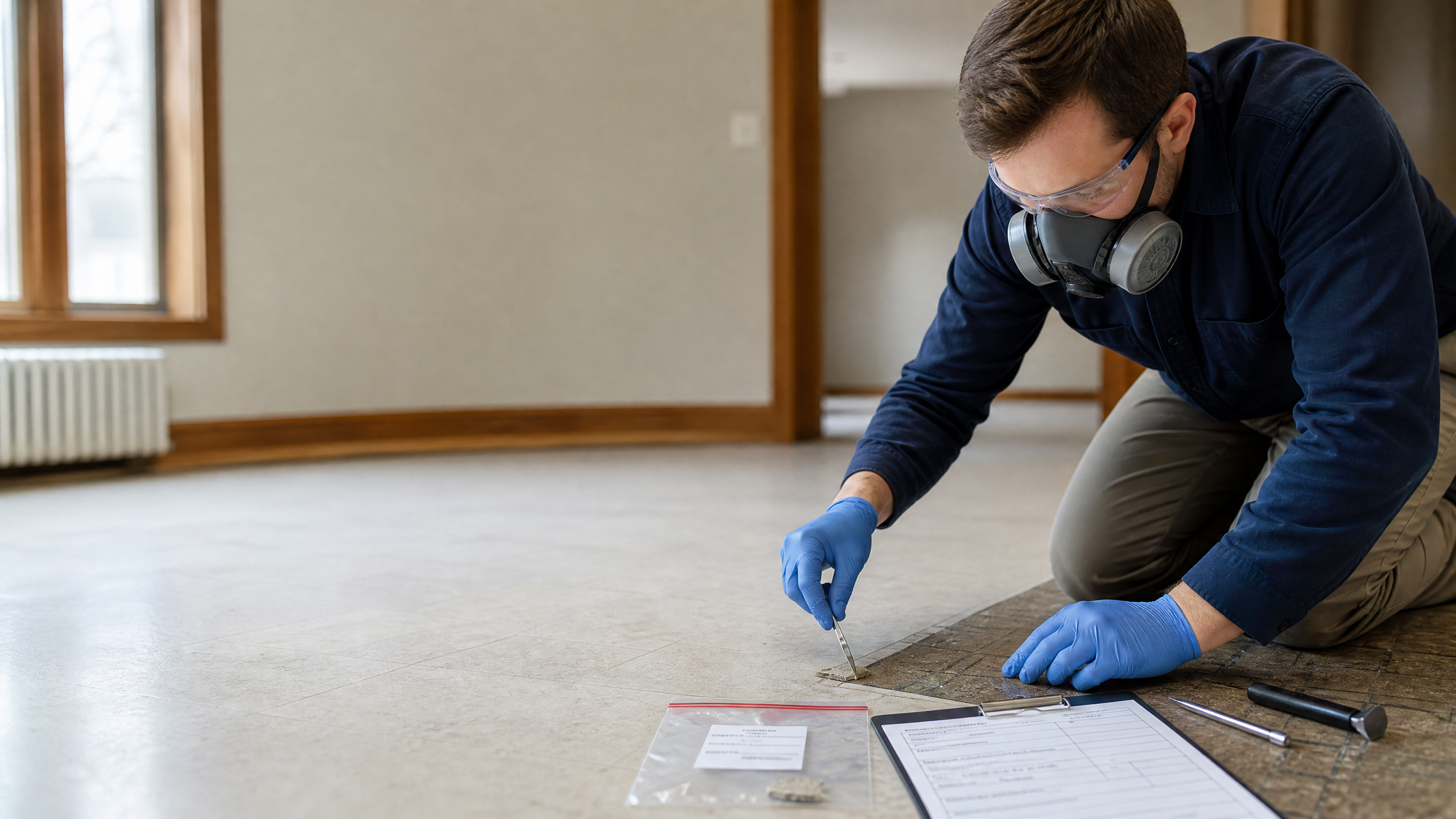
Sample Collection
We carefully collect samples following EPA protocols to prevent fiber release
Laboratory Analysis
Samples are analyzed by an accredited laboratory using PLM or TEM methods
Detailed Report
You receive a comprehensive report with findings and recommendations
When Highland Park Property Owners Should Test for Asbestos
Asbestos is only dangerous when disturbed. Testing is essential before any activity that might release fibers into the air.
- Before any renovation or demolition project
- When purchasing any property (asbestos can be present in buildings of any age)
- If you notice damaged or deteriorating building materials
- During real estate transactions
- After storm damage to older buildings
- When planning HVAC system upgrades
Trusted Asbestos Testing in Highland Park
No Conflict of Interest
We only test — we never remediate. Our results are always unbiased.
Fast Turnaround
Get your lab results quickly so you can make informed decisions.
Detailed Reports
Comprehensive reports with clear findings and recommendations.
Accredited Labs
Samples analyzed by NVLAP-accredited laboratories.
Also Serving Nearby Areas
Other Services in Highland Park
We offer a full range of environmental testing and inspection services in Highland Park. Explore our other services below.
Mold Testing in Highland Park
Professional mold inspection and air quality testing to protect your family's health.
Property Inspections in Highland Park
Comprehensive home inspections for buyers, sellers, and property owners.
Looking for general information? Visit our main Asbestos Testing page to learn more about our services and process.
Schedule Your Asbestos Inspection Today
Protect your family from dangerous asbestos exposure. Our certified inspectors provide thorough testing with fast, accurate lab results for Michigan properties.